Savage Realty Guide
Investment Property Evaluation Checklist
A reusable worksheet for acquisition, financing, operations, cash flow, return measures, sensitivity testing, and exit planning.
Discuss an Investment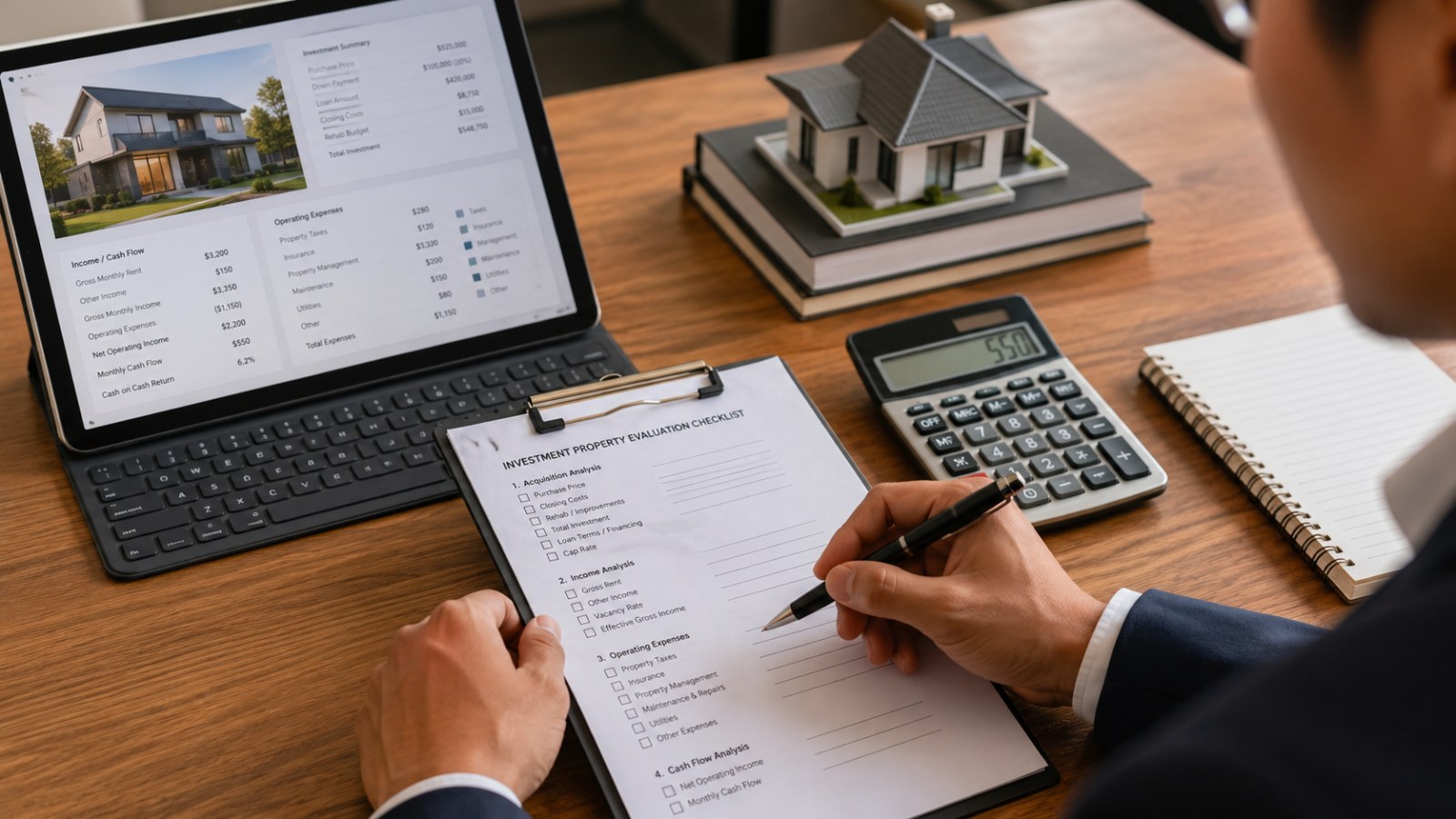
What This Guide Covers
- Investment objective
- Acquisition and capital needs
- Income and operating expenses
- Return measures
- Risk and exit
Define the objective and property
The analysis must reflect the strategy.
- Define the property’s lawful demand segment, intended use, lease structure, relevant property characteristics, hold period, income goal, renovation plan, management approach, and exit scenario.
- Identify location, condition, rental demand, restrictions, financing fit, and the work required to execute the plan.
Build the acquisition budget
Include the cash required before the property stabilizes.
- Record purchase price, down payment, lender fees, closing costs, inspections, immediate repairs, capital improvements, carrying costs, and initial reserves.
- Document interest rate, term, amortization, payment, points, and assumptions about refinancing.
Model operations
Use supportable income and complete expenses.
- Estimate rent and other income, then account for vacancy and collection loss.
- Recurring operating expenses may include taxes, insurance, association fees, owner-paid utilities, routine maintenance, management, leasing, lawn, pool, pest, accounting, and other recurring costs.
- Calculate NOI from effective gross income less recurring operating expenses. Model debt service, replacement reserves, and capital expenditures separately to reach before-tax cash flow.
Calculate and test returns
No single measure tells the whole story.
- Calculate effective gross income, net operating income, debt service, before-tax cash flow, cap rate, cash-on-cash return, and debt-service coverage where relevant.
- Test lower rent, higher vacancy, larger repairs, rising taxes or insurance, slower lease-up, and different sale outcomes.
Plan verification and exit
List every assumption that is not yet documented.
- Verify leases, rent roll, expenses, restrictions, condition, permits, insurance, financing, management, and market assumptions through appropriate sources.
- Model expected selling costs, projected loan payoff, net sale proceeds before tax, capital improvements during ownership, resale market, and holding-period risk.
- Ask a CPA or tax adviser to review potential gains and depreciation-related consequences, and state a specific alternate strategy—such as continued rental, a different lease structure, or an earlier sale—rather than writing only “alternative exit.”
Evaluation Worksheet
| Acquisition | Purchase price: __________ · Down payment: __________ · Lender costs: __________ · Closing costs: __________ · Inspections: __________ · Immediate repairs: __________ · Capital improvements: __________ · Carrying costs: __________ · Initial reserves: __________ · Total initial cash: __________ |
|---|---|
| Income | Scheduled rent: __________ · Other income: __________ · Vacancy and collection loss: __________ · Effective gross income: __________ |
| Recurring operating expenses | Taxes: __________ · Insurance: __________ · HOA: __________ · Owner-paid utilities: __________ · Routine maintenance: __________ · Management: __________ · Leasing: __________ · Lawn: __________ · Pool: __________ · Pest: __________ · Accounting: __________ · Other recurring expenses: __________ · Total operating expenses: __________ |
| Returns | NOI: __________ · Debt service: __________ · Replacement reserves: __________ · Capital expenditures: __________ · Before-tax cash flow: __________ · Cap rate: __________ · Cash-on-cash return: __________ · DSCR: __________ |
| Exit | Hold period: __________ · Assumed sale price: __________ · Selling costs: __________ · Projected loan payoff: __________ · Estimated net sale proceeds before tax: __________ · Capital improvements made during ownership: __________ · Tax review by CPA or tax adviser: __________ · Specific alternate exit: __________ |
Action Checklist
- Define objective and hold period
- Define the lawful demand segment and intended use
- Build full acquisition budget
- Document financing assumptions
- Estimate supportable income
- Include vacancy
- List recurring operating expenses
- Model replacement reserves and capital expenditures separately
- Calculate multiple return measures
- Run sensitivity cases
- Verify restrictions and condition
- Model exit costs and loan payoff
Common Mistakes to Avoid
- Using asking rent without support
- Omitting vacancy, management, leasing, or reserves
- Treating cosmetic work as the only capital need
- Assuming appreciation will solve weak operations
- Using one optimistic scenario
Questions to Ask
- What must this property accomplish?
- Which inputs are documented and which are estimates?
- What happens if rent is lower or repairs are higher?
- What expertise is needed before acquisition?
- What is the alternative exit?
This guide provides general educational information and is not individualized legal, tax, lending, insurance, inspection, engineering, appraisal, property-management, or investment advice. Contract documents, current law, lender requirements, title documents, and property-specific professional evaluations control.
Last reviewed: July 2026
Ready to Discuss Your Situation?
Use this guide to prepare your questions, then contact our team for guidance tailored to the property and decision in front of you.
Discuss an Investment Contact Our Team